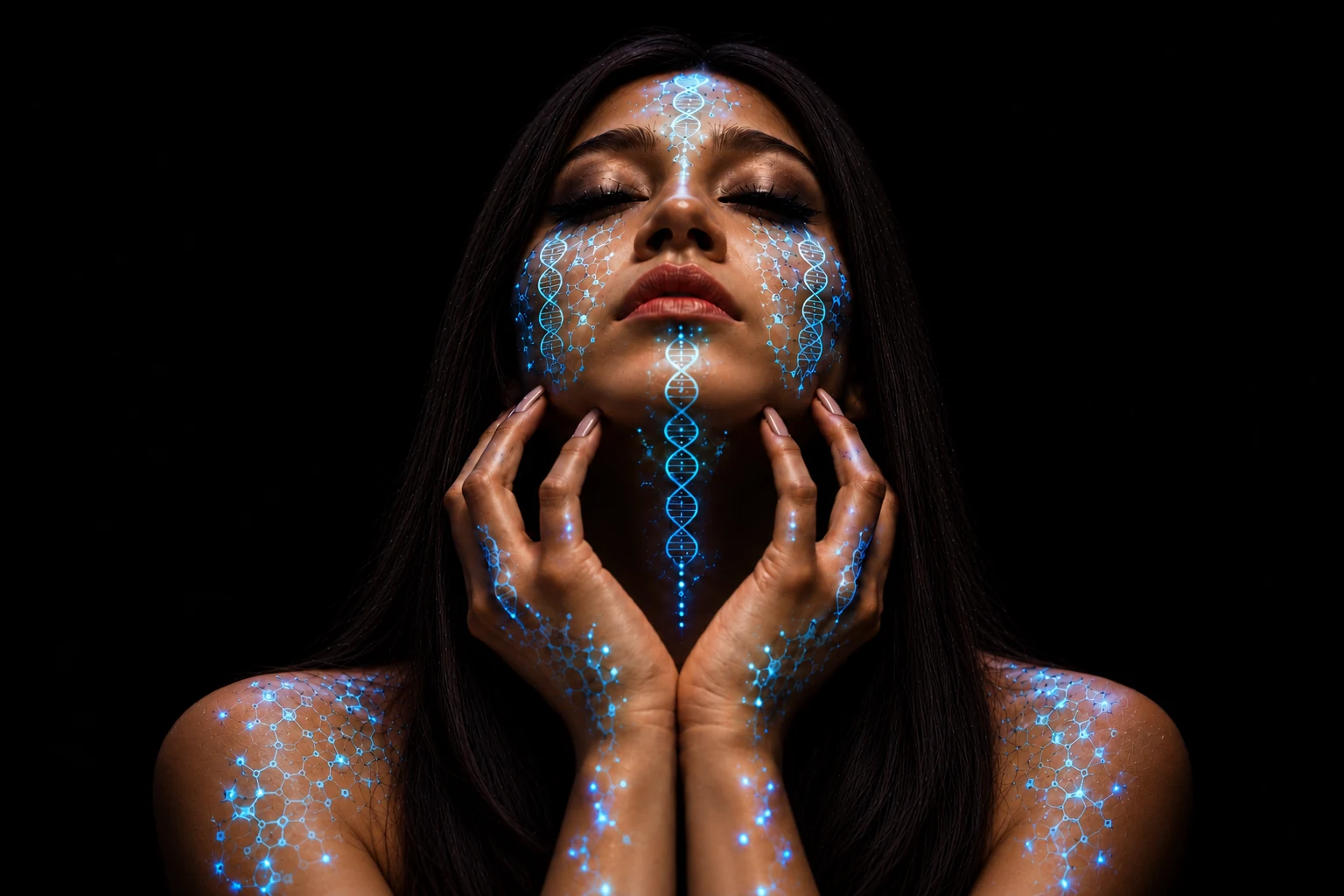
Some people spend years practicing techniques in hopes of developing psychic abilities, commonly referred to as psi. Others report experiencing these phenomena spontaneously from early childhood, long before they even had a language for it. For those of us who grew up with these experiences, the question wasn't necessarily whether something considered extraordinary was possible. It was about understanding something that had always been a normal part of our lives.
Psi refers to the perceptions commonly described as telepathy (mind-to-mind communication), clairvoyance (perception of hidden or distant information), precognition (awareness of future events), and psychokinesis (mind-matter interaction). In parapsychology, the word is used to investigate these unknown phenomena without presupposing their underlying mechanisms or committing to any particular philosophy of mind.
According to my mom, I started showing signs of psi at 6, similar to herself at that age. I was about 11 or 12 when I began reading secondhand psychology books and experimenting with my own abilities with UNO cards, trying to distinguish what I was experiencing from what I might have been imagining or misinterpreting. I wanted to understand myself, discover how far I could push my abilities, determine where my limitations were, and whether I could overcome them. Similar experiences had been reported across three generations of my family. Two made the local newspaper. But I wanted to explore what I could do for myself.
I wasn't alone in that curiosity. Around the world, children and adults report psi experiences they struggle to explain, sometimes in environments where discussing them openly invites ridicule or termination from their positions in academia. According to a multinational survey of 18,607 adults, 34% of Europeans and 54% of Americans reported experiencing telepathy, 21% and 25% reported clairvoyance, and 25% and 30% reported contact with the deceased (Haraldsson & Houtkooper, 1991).
Throughout history, people reporting experiences have faced vastly different responses. Some have been called demonic, persecuted, or even killed, while others have been revered as saints or shamanic healers. Religious movements have emerged around individuals reporting visions, while others have been confined to psychiatric institutions in the West.
Experiences interpreted as sacred or meaningful in one society may provoke fear, ridicule, or pathologization in another. Yet, beneath these different cultural interpretations lies something deeply human: the desire to understand ourselves and our experiences.
Not to surrender those experiences to political authorities, patriarchal religious institutions, or some bureaucratic self-appointed scientific gatekeeper, but to investigate them through open inquiry, critical thinking, philosophy, multiple epistemologies, and scientific investigation. To question what we think we know about consciousness, human perception, and the realms of existence around us. And perhaps most importantly, to ask whether the boundaries we place on reality are truly boundaries of nature itself or reflections of the historical, social, cultural, and institutional constraints imposed on us since birth.
This article explores two interconnected questions. Could inherited biological characteristics influence why some individuals report extraordinary experiences from early childhood? And how do family environments, cultural beliefs, and social responses shape the way we understand those experiences and ourselves? By bringing together research in genetics, psychology, and human development, perhaps we can begin exploring these questions without assuming that any one explanation tells the whole story.
Exploring Unknown Territory in Science
For those of us who have spent much of our lives trying to understand these experiences, the question of where they come from is particularly interesting. Why do some people report them from their earliest memories, while others spend years attempting to develop similar experiences through psychedelics, meditation, and ritual practice? Some only report them after trauma or near death. Yet, we can go in and out of altered states at will. What made us different? Why do they sometimes appear across multiple generations of our family?
Today, pioneering researchers are investigating whether genetics, brain development, and evolutionary biology might help explain why some individuals report extraordinary experiences more frequently than others. Their findings are still early, and the biological basis of psi has yet to be established. Nevertheless, these investigations raise a fascinating question. Could some of the differences that have been debated, dismissed, or misunderstood for generations have roots in human biology?
Research into this possibility has gradually expanded from family histories and inheritance patterns to DNA sequencing, molecular biology, and evolutionary theory.
Family Inheritance and Scottish Second Sight
The idea of a possible hereditary connection is not particularly surprising. The majority of us who were born this way have had a parent who had precognitive dreams, a grandparent reporting visions, or a sibling describing knowing something before it happened. These similarities can become part of ordinary family life and routine. Or, as it was in my family with goodbyes, “Whatever you do, don't tell anybody or predict anything outside this house. They'll either lock you in the loony bin or call a priest to drown you in holy water. Okay, stay safe, love you.” Let’s just say Western culture isn't particularly open minded about these things.
One of the earlier scientific investigations into the question of heredity was conducted by Shari A. Cohn (1999). Her study, Second Sight and Family History: Pedigree and Segregation Analyses, examined 130 family histories involving reports of second sight in Scotland.
Second sight is traditionally understood as spontaneous awareness of distant or future events, appearing through vivid mental images, dreams, or other sensory impressions. Within Scottish cultural traditions, these experiences have been regarded as an inherited family characteristic. Cohn (1999) constructed family pedigrees to investigate whether reports of second sight across generations followed recognizable patterns of genetic inheritance.
Her analysis suggested that the reported family patterns were consistent with an autosomal dominant model. In conventional genetics, this describes a situation in which a single copy of a particular gene variant can be sufficient to influence a trait. However, consistency with an inheritance model does not establish that the reported experiences were genetically transmitted. Social and cultural influences could also contribute to the patterns observed within families (Cohn, 1999).
Consider the differences between two children reporting similar experiences. One grows up in a family where precognitive dreams are openly discussed and treated as an ordinary part of life. The other grows up in an environment where discussing such experiences invites ridicule or concern. Both children may describe unusual events, but their opportunities to recognize, interpret, and communicate those experiences may be very different.
This raises an important question. Are families transmitting a biological predisposition, a cultural understanding of unusual experiences, or some combination of the two? Nature versus nurture. Cohn's work provides an early foundation for investigating these possibilities.
The Search for Genetic Markers
As genetic technology advanced, researchers gained new opportunities to explore possible biological differences among people reporting psi experiences.
In a study first published online in 2021 and appearing in the 2022 volume of EXPLORE, Helané Wahbeh, Dean Radin, and colleagues investigated whether individuals reporting psychic abilities possessed identifiable genetic differences from people who did not report such abilities (Wahbeh et al., 2022).
The researchers screened more than 3,000 candidates for abilities before selecting only 13 individuals identified as psychic cases and 10 matched controls. One control sample was later excluded because of quality concerns, leaving nine usable controls. Using DNA collected from saliva samples, the team performed whole exome sequencing, a technique that examines the protein coding portions of the genome.
The researchers did not identify protein coding differences that reliably distinguished the groups. However, they observed a potentially interesting variation in a noncoding region of a gene called TNRC18, located on chromosome 7. A particular genetic variation appeared in seven of the nine control participants but was absent among the thirteen individuals identified as psychic cases.
Interestingly, the participants identified as psychics carried the reference form of this genetic sequence, while most controls carried the alternative variation (Wahbeh et al., 2022).
This raises an intriguing question. What if the biological difference was not found in those reporting psi experiences, but in those who did not report them? Could the absence of such experiences, rather than their presence, be the characteristic worth investigating?
Of course, this finding does not mean that researchers discovered a gene solely responsible for psychic abilities, nor does it establish that people who do not experience psi are biologically unusual. Nevertheless, the findings introduce a possible genetic association worth investigating in larger populations.
For those who report experiencing psi from childhood, this research opens another avenue of inquiry into whether biological factors might influence individual differences in these experiences. Whether TNRC18 plays any role remains an open question, but some are investigating.
Alejandro Álvarez and the Molecular Biology of Psi
The investigation did not end with identifying a possible genetic variation. Molecular biologist Alejandro Álvarez took an interest in the TNRC18 findings and began exploring what the gene's corresponding protein might actually do.
In his 2021 presentation, Molecular Bases of Psychic Talent: Functional and Structural Analysis of the TNRC18 Protein, Álvarez (2021) used bioinformatics tools to investigate the protein's predicted structure, functional characteristics, and evolutionary distribution.
TNRC18 is a particularly large protein whose biological functions remain incompletely understood. Álvarez identified predicted protein domains associated with processes involved in regulating gene expression. He proposed that TNRC18 might participate in broader networks of molecular interactions rather than functioning independently (Álvarez, 2021).
Gene regulation influences when, where, and how strongly genes are expressed. These processes are essential to biological development and the functioning of complex organisms. This is particularly interesting because human characteristics rarely develop through the activity of a single gene. Many differences in cognition, behavior, perception, and neurological functioning emerge through interactions involving multiple genes, developmental processes, and environmental influences.
If genetic factors eventually prove relevant to psi, the explanation may therefore be considerably more complex than identifying one particular gene. Álvarez also examined the evolutionary history of TNRC18 and related proteins, identifying their presence across multiple branches of animal evolution (Álvarez, 2021). This led him toward an even broader question. If psi has a biological foundation, could some underlying capacity have emerged long before modern humans?
In his 2026 paper, Towards a Natural History of Psi: An Evolutionary Proposal Based on Consilience of Inductions, Álvarez (2026) explored the hypothesis that psi could represent an ancestral biological capacity rather than something exclusive to our species. His proposal draws upon evolutionary theory, comparative biology, and parapsychological research to consider whether a capacity resembling psi might have developed or persisted because of potential survival advantages.
Álvarez's proposal still remains theoretical. Yet, his work introduces questions that reach beyond human experience alone.
For individuals who have always experienced psi as something spontaneous rather than learned, the possibility of an underlying biological history may be particularly intriguing. It also raises an important distinction. If such a capacity were eventually established, would it represent something that humans developed through cultural practices, or something that human beings have always possessed to varying degrees, similar to any other sense?
New Developments in Psi Genomics
More recently, researchers have begun investigating a wider range of genetic variations rather than concentrating on a single candidate gene.
In April 2026, Wahbeh and colleagues published Genomic Correlates of Self-Reported Psychic Experiences: An Exploratory Analysis (Wahbeh et al., 2026). The study examined genetic data from 102 adults who reported having experienced at least one psychic phenomenon. Unlike the earlier investigation comparing psychic cases with controls, this study examined genetic differences among participants reporting varying levels of psychic experiences.
The researchers identified 212 single nucleotide polymorphisms associated with differences in self-reported psychic experience scores after statistical correction (Wahbeh et al., 2026). Single nucleotide polymorphisms, often called SNPs, are variations in DNA involving changes to individual genetic building blocks.
One of the strongest associations involved a variant mapped to ARHGEF18, a gene associated with cellular processes contributing to dendritic development. Dendrites are branching structures on neurons that receive and integrate signals from other cells. Their development contributes to the organization of neural networks. Other candidate variants were associated with genes involved in calcium signaling, brain structure, microtubule dynamics, and developmental regulation (Wahbeh et al., 2026).
The research documented two observations particularly relevant to people who report experiences beginning early in life. Most participants reported their first psychic experience before the age of 24, while 82 percent reported family members with similar experiences (Wahbeh et al., 2026).
For those who have lived with extraordinary experiences since childhood, these findings may sound familiar. But scientific research must go further than identifying similarities. It has to investigate whether these family patterns reflect inherited biological characteristics, shared environments, cultural expectations, or other influences.
These findings also introduce an important developmental question. If certain biological characteristics influence unusual experiences, how might those characteristics interact with the developing nervous system throughout childhood?
Creativity, Genetics, and Altered States of Consciousness
Another possibility worth exploring is whether those genetic factors influence how easily we enter altered states of consciousness. Some people seem naturally able to become deeply absorbed in their thoughts, imagination, or surroundings. They may experience vivid mental images, lose track of time, or enter states of awareness that feel different from everyday consciousness.
This question is particularly interesting to me because many members of my family are professional artists and musicians. Creativity and imagination seem to run throughout my family, alongside reports of extraordinary experiences across generations. In fact, I don't think I've ever met someone who reports experiencing psi who wasn't also an artist in some way, whether through music, painting, writing, or another form of creative expression.
It makes me wonder whether these characteristics might be connected. Artists sometimes describe becoming so absorbed in their work that they lose track of time or enter what feels like a trance. When I use a random number generator on the computer to make predictions, I need to enter a similar trance-like state to achieve accuracy. If I cannot enter or maintain that state, my performance disappears.
Researchers have studied a psychological characteristic called absorption, which describes how easily a person becomes deeply immersed in an experience. In a review of existing research, Lifshitz, van Elk, and Luhrmann (2019) explored how absorption relates to vivid spiritual and unusual experiences, including those occurring during meditation, music, and psychedelic use.
This connection is interesting because researchers are also investigating how genetics may influence individual responses to psychedelics. This emerging field, known as psychedelic pharmacogenomics, examines why people can experience different changes in perception, emotion, and awareness when taking the same substance. Although this research does not directly investigate psi, it offers another way to explore how individual biological differences might influence altered states of consciousness.
Together, these areas of research raise an intriguing question. Could inherited characteristics influence how easily people enter altered states of consciousness, whether through creativity, spontaneous extraordinary experiences, or psychedelics?
For centuries, skeptics have dismissed extraordinary experiences as imagination or coincidence. But what if altered states of consciousness allow knowledge and creativity to emerge in ways we don't yet understand? Are we opening a gate to expanded reality, or are we weaving it?
Genetics alone may not explain how these experiences develop or why people experience them differently throughout their lives. That brings us to childhood development and the environments in which we grow up.
Genetics, Epigenetics, and Childhood Development
Being born with a biological predisposition does not necessarily mean that a characteristic will appear in the same way throughout a person's life. Human development is shaped by complex interactions among genetics, neurological maturation, environmental influences, and personal experience.
Epigenetics examines biological mechanisms that regulate gene activity without changing the underlying DNA sequence. Factors such as nutrition, stress, environmental exposures, and other developmental conditions can influence biological functioning through multiple pathways. Although no epigenetic mechanism responsible for psi has been established, understanding how biology interacts with development offers another direction for future investigation.
Why do some individuals report unusual experiences during early childhood, while others first encounter them during adolescence or adulthood? Do the experiences change as the brain develops? Could individual differences in attention, perception, memory, or other psychological characteristics influence how unusual experiences are recognized and interpreted? And how much of what people identify as psi is shaped by the environments in which they grow up?
These questions are especially important when considering children. A child who reports vivid precognitive dreams, unusual sensory impressions, or apparent communication with someone at a distance does not recognize these experiences as extraordinary. They are just describing what happened from their own perspective.
It is often through interactions with adults, peers, educational institutions, and cultural expectations that children begin learning which experiences are considered normal, meaningful, unacceptable, or impossible. Those responses can become part of how a person understands themselves.
Biology may influence what a person experiences, while their social environment may influence how they understand those experiences and themselves.
Born With It, But What Does That Mean for Identity?
For those who grew up reporting extraordinary experiences, learning how other people respond to them can become as significant as the experiences themselves. Some are fortunate to be raised in families where such experiences are accepted as part of everyday life. Others learn early that discussing them openly may result in ridicule, disbelief, concern, or social exclusion.
Over time, these responses may influence whether a person chooses to share their experiences, question their interpretations, seek explanations, or remain silent.
Developmental psychology offers an opportunity to examine these processes through identity formation, emotional development, social relationships, and the influence of culture. A child can recognize that their experiences may be treated differently from those of their peers. As children develop, they begin to recognize social expectations about what is considered normal, acceptable, or believable. These expectations may influence not only how they interpret their experiences but also how they come to understand themselves.
The Consequences of Stigma and Misunderstanding
Because so little funding is devoted to researching this community for successful outcomes, harmful stereotypes continue to persist, often with real consequences for the people reporting them. Just because a child reports an unusual experience does not automatically mean they have experienced abuse or trauma. It does not mean they are lying, have a cognitive impairment, or have another mental health condition. These possibilities should not be assumed simply because a child's experience challenges the belief system of their culture.
Research examining extraordinary experiences provides important reasons to question these assumptions. In a study involving 16 children and young people between the ages of 4 and 21, Thomas (2022) explored how participants understood their anomalous experiences and how those experiences affected their lives. Many described opportunities for personal growth, greater self-awareness, and a stronger sense of connection with themselves and others. The study also highlighted how responses from adults in positions of authority could contribute to distress or negatively affect children's well-being.
Similarly, Moreira-Almeida and Cardeña (2011) found that spiritual and anomalous experiences are not necessarily signs of psychiatric disorders. Their research emphasizes the importance of considering emotional distress, everyday functioning, cultural context, and the individual's overall psychological well-being before determining whether an experience requires clinical intervention.
These findings are particularly important because how adults respond to children's extraordinary experiences can influence whether they feel safe discussing them.
Parents and counselors should therefore use techniques that build self-esteem, support healthy identity development, encourage critical thinking, and help children develop emotional resilience. Children deserve to be heard without judgment.
We also need to challenge social media commentary and organizations that take scientific research out of context to reinforce stereotypes or pathologize experiences of this marginalized community.
Ultimately, the goal is not to tell children what their experiences mean, but to create an environment where they can speak openly, receive appropriate support, develop a healthy sense of self, and explore their experiences without fear of ridicule or being unfairly labeled.
Internalized Stigma and Young Adulthood
The psychological consequences of social stigma surrounding extraordinary experiences and unconventional beliefs for adults have received some empirical attention.
In a 2022 study published in the American Journal of Criminal Justice, Heitkamp and colleagues investigated the relationship between psi beliefs, social stigma, and substance use among college students. The researchers used the established category of paranormal beliefs, which encompasses a broader range of beliefs than firsthand psi experiences. Nevertheless, it's relevant.
Drawing upon labeling theory, the researchers examined whether internalizing negative social judgments about these beliefs was associated with differences in substance use.
Their findings suggested that students who internalized negative labels associated with their beliefs reported higher levels of substance use. Interestingly, perceived social stigma showed a different relationship, with greater awareness of external disapproval associated with lower levels of substance use. The researchers also identified a more complex interaction between perceived stigma and internalized labeling (Heitkamp et al., 2022).
These findings introduce an important distinction between recognizing that society disapproves of one's beliefs and accepting those negative judgments as part of one's identity. The study only examined beliefs rather than firsthand psi experiences, and its findings among college students cannot automatically be extended to everyone reporting extraordinary experiences.
Nevertheless, the research raises broader questions relevant to developmental psychology. What happens when children repeatedly encounter negative judgments about experiences they consider part of their everyday lives, and how will that influence them as adults?
Rather than assuming that unusual experiences cause psychological distress, researchers should investigate whether the opposite may be true. Could the distress actually result from how people are treated after reporting these experiences? Social rejection, ridicule, negative labeling, and internalized stigma may contribute to psychological difficulties that are later mistakenly attributed to the experiences themselves.
Where Does the Research Go From Here?
Research into the possible genetics of psi remains in its early stages. Family studies have suggested possible patterns of inheritance. Molecular investigations have identified candidate genetic associations. Evolutionary proposals have introduced hypotheses about whether psi could have a biological history extending beyond human beings (Cohn, 1999; Wahbeh et al., 2022, 2026; Álvarez, 2026).
Future investigations will require larger and more culturally diverse populations, independent replication, longitudinal developmental studies, and careful comparisons between reported experiences and performance under controlled experimental conditions. Researchers must also consider how family traditions, cultural expectations, and social environments influence the recognition and interpretation of extraordinary experiences.
For those of us who have lived with these experiences since childhood, the significance of this research extends far beyond identifying genes or explaining unusual perceptions. It raises deeper questions about human variation, childhood development, identity, and what happens when individuals grow up in societies that struggle to make room for experiences outside their accepted worldview.
For generations, people reporting extraordinary experiences have been told what their experiences mean, what they should believe, and whether their perceptions deserve to be taken seriously. Too often, the authority to interpret these experiences has belonged to everyone except the people living them.
But we are not merely subjects of scientific curiosity. We are observers, questioners, and investigators of our own lives. Many of us began questioning the nature of consciousness long before we knew the language of neuroscience, genetics, or parapsychology.
Perhaps some individuals are born with a greater predisposition. Perhaps biology, consciousness, culture, and development interact in ways we have only begun to investigate. We do not yet have all the answers, and that is exactly why these questions deserve serious scientific attention.
Science advances when people have the courage to challenge assumptions, investigate uncertainty, and question the authority of dominant paradigms. We do not need science to tell us what our experiences mean. We need scientists willing to investigate how they happen instead of dismissing what does not conform to their philosophical assumptions. No institution, discipline, or dominant worldview has the authority to dictate the limits of human experience or determine which ways of knowing deserve legitimacy.
When existing frameworks fail to adequately account for these experiences, the answer is not to force people to conform to them. It is to challenge the structures of epistemic authority that have historically marginalized other ways of understanding consciousness and mental health. We have every right to create alternatives, expand meaningful choices, and develop approaches that reflect the diversity of human experience. Science is a method of inquiry, not a monopoly on truth, and intellectual progress does not require permission from those invested in maintaining the status quo.
After all, nature has never been obligated to conform to our understanding of it. Our understanding of nature has changed dramatically throughout history, and there is no reason to believe it will stop evolving.
References
Álvarez, A. (2021). Molecular bases of psychic talent: Functional and structural analysis of the TNRC18 protein [Conference presentation abstract]. SSE–PA Connections 2021, Society for Scientific Exploration and Parapsychological Association.
Álvarez, A. A. (2026). Towards a natural history of psi: An evolutionary proposal based on consilience of inductions. Journal of Scientific Exploration, 40(1), 124–148.
Cohn, S. A. (1999). Second sight and family history: Pedigree and segregation analyses. Journal of Scientific Exploration, 13(3), 351–372.
Haraldsson, E., & Houtkooper, J. M. (1991). Psychic experiences in the multinational human values study: Who reports them? Journal of the American Society for Psychical Research, 85(2), 145–165.
Heitkamp, A., Mowen, T. J., & Boman, J. H., IV. (2022). Substance use on campus: Exploring the implications of paranormal beliefs. American Journal of Criminal Justice, 47(2), 330–351.
Lifshitz, M., van Elk, M., & Luhrmann, T. M. (2019). Absorption and spiritual experience: A review of evidence and potential mechanisms. Consciousness and Cognition, 73, Article 102760.
Moreira-Almeida, A., & Cardeña, E. (2011). Differential diagnosis between non-pathological psychotic and spiritual experiences and mental disorders: A contribution from Latin American studies to the ICD-11. Revista Brasileira de Psiquiatria, 33(Suppl. 1), S21–S36.
Thomas, D. (2022). A participatory research study to explore the healing potential of children's anomalous experiences. EXPLORE, 18(5), 551–558.
Wahbeh, H., Delorme, A., Cannard, C., Rossner, R., Yount, G., & Radin, D. (2026). Genomic correlates of self-reported psychic experiences: An exploratory analysis. EXPLORE, 22(4), Article 103416.
Wahbeh, H., Radin, D., Yount, G., Woodley of Menie, M. A., Sarraf, M. A., & Karpuj, M. V. (2022). Genetics of psychic ability: A pilot case-control exome sequencing study. EXPLORE, 18(3), 264–271.